Industry
SURPLUS WIRE FROM MANUFACTURING AND FABRICATION
A plant buys wire by the project and stores it by the pallet. Machines get moved, cells get rearranged, a line is retooled for a new part, and the cable cut for the old layout has nowhere to go. Maintenance keeps the rest because copper is copper, and the shelf fills up one hook at a time. Most of it is indoors, tagged and usable. If your shop is holding surplus wire from that cycle, send the details and we will review the material and discuss pricing.
Manufacturing and Metal Fabrication
North DakotaRetooling and the cable left behind
When a machine moves, the feeder usually gets cut at both ends. What remains is a length that no longer fits the new run: three conductor with ground in #6 or #4, tray cable out of a control cabinet, a coil of THHN from a conduit pull. The maintenance electrician coils it, tapes it, and writes the size on the tape with a marker. That tag is a starting point, not a specification.
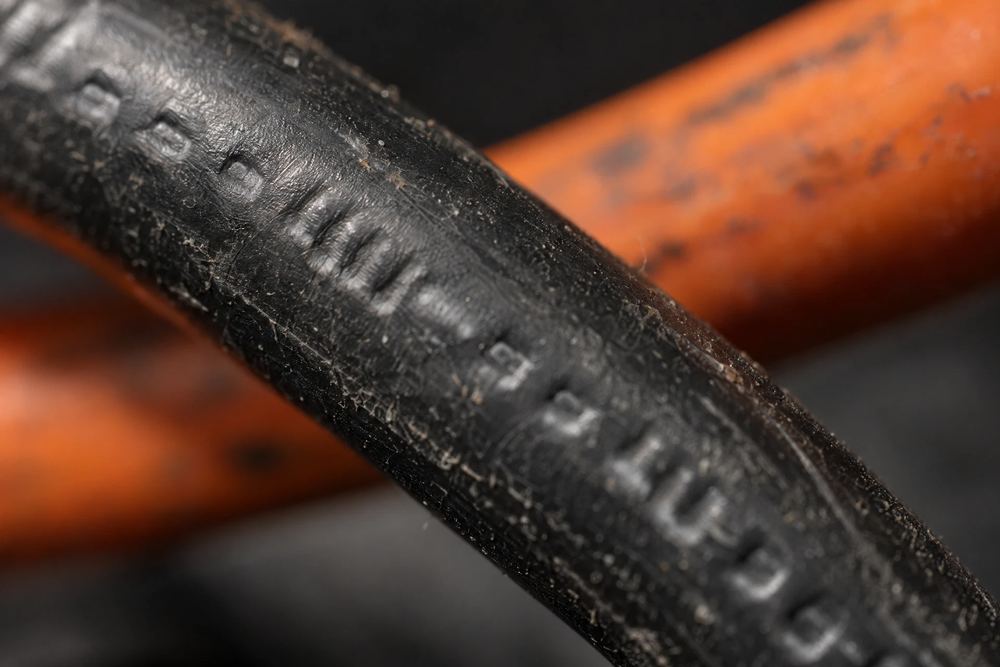
Those shop floor notes are useful, but the jacket legend is better. The print gives type, size, temperature rating and voltage class. A marker note that reads 4/0 might be aluminum, and aluminum does not belong in the same conversation as copper. If the marker note and the print disagree, the print wins. Confirm the conductor, then the stranded length, then the condition of the jacket at both ends.
Fabrication benches, welding and machine tools
Welding is the loudest source of surplus cable in a fabrication shop. Welding cable in #2 and 1/0, sometimes 2/0, gets replaced when the jacket stiffens or a connector pulls loose. The old cable is often still sound, just unpleasant to drag across a floor, which is exactly why it ends up coiled on a hook behind the machine instead of in a bin by the door.
Machine tools add control and power runs: VFD cable from a drive, shielded cable to an encoder, SOOW cord on a portable tool, and grounding conductor from a bus bar to a frame. Short lengths of any of these are the hardest to buy new and the easiest to leave on a shelf for a decade, which makes them worth a photograph and a measurement. Keep the length, the connector end and the jacket print in the same frame.
Racking, cartons and outbound freight
Manufacturers store cable in ways that help. Cartons keep their labels, spools keep their footage, and reels stay on racking instead of in the mud. If a carton is open, count what is inside and photograph the label on the end. Cartons matter most for low-voltage and communication cable, where 1,000 foot boxes are the normal package and the count is most of the quote. Reels that left the rack for a job and came back unbilled are the usual source.
Outbound is usually the easy part at a plant: a dock, a forklift and a carrier that already stops there. Tell us the door height, the weight on the pallet, and whether the reels can be picked from the side. We arrange pickup or shipping from there. Material with a readable tag and an intact jacket gets a fair look.
Which wire and cable shows up
- THHN and XHHW from conduit pulls
- Tray cable and TC-ER from control cabinets
- VFD cable and shielded motor leads
- Welding cable in #2 and 1/0
- SOOW cord on portable tools
- SER and SEU service cable
- Communication and low-voltage cable in cartons
- Bare copper grounding and jumpers
How surplus accumulates in this sector
- A machine move leaves a feeder cut to a length nobody can reuse.
- A cell is retooled and the control cable comes out with the old cabinet.
- A welder is replaced and the old cable stays on the hook.
- A plant standardizes on one conductor type and the older stock is orphaned.
- An expansion phase is cancelled after the material is delivered.
- Maintenance overbuys for a shutdown and the surplus goes on the top rack.
- A line is retired and the spools in the crib are never issued again.
This is not a customer list. These are potential seller audiences in North Dakota. No facility, contractor or company is described as having surplus inventory, and no relationship or endorsement is implied.
Request a purchase quote
Send the wire details. Get a real conversation.
Photos and a few specs are enough to start. We will come back with questions or pricing, then agree on pickup or shipping.
Clearing a storeroom or a laydown yard?
Send one wide photo of the pile and whatever tags you can read. We will work from there.