Wire category
WE BUY SURPLUS BARE AND INSULATED COPPER WIRE
Bare copper does not need a legend. It is copper, and the review follows the weight and the condition, which makes it the simplest thing on this list to describe and the easiest to underestimate. We buy bare grounding conductor, tinned copper, and insulated copper wire in every construction, from green THHN to welding cable. A coil of #6 and a drum of 500 kcmil are both bare copper and get reviewed on completely different scales.
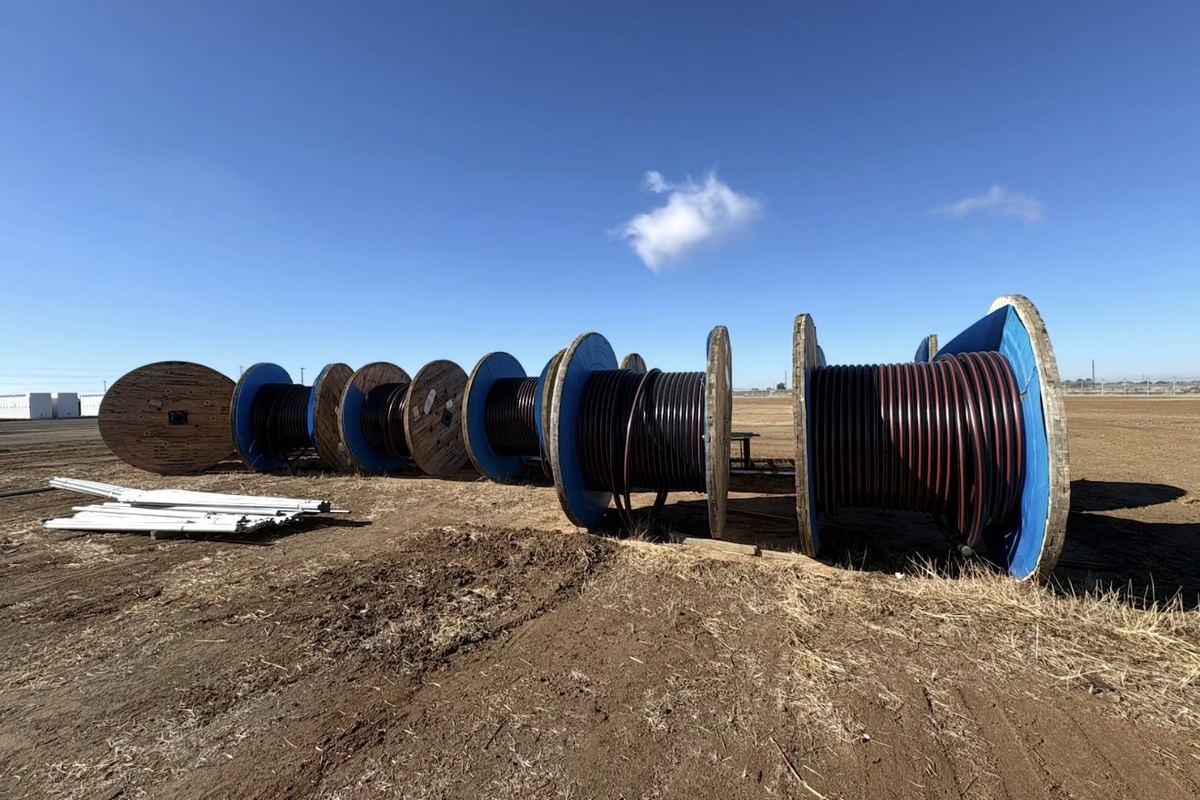
Bare and Insulated Copper Wire · North Dakota
Surplus wire, reviewed from photosTwo things drive the review: how much copper is actually in the reel, and how much of the gross weight is insulation, tape, filler and jacket. A reel of 4/0 THHN is mostly copper. A reel of 18 AWG control cable is mostly not. Send the size, the construction and a photo of the tag, and the arithmetic has somewhere to start. Footage and weight together tell a better story than either one alone, so send both if you have them.
What we buy in this category
- Bare soft drawn copper from #14 through 500 kcmil
- Tinned copper conductor and braid
- Green insulated grounding conductor
- Bare neutral and messenger assemblies
- THHN, XHHW-2 and USE-2 copper in any size
- Copper welding cable and portable cord
- Coils, bundles and cut lengths
- Partly oxidized wire from outdoor storage
Bare, tinned and where each one shows up
Bare soft drawn copper is the standard grounding conductor from #14 up to 500 kcmil, solid in the smaller sizes and stranded above. Tinned copper carries a thin tin coating that resists corrosion in marine, chemical and high humidity settings, and it reads dull silver rather than bright. Both get reviewed; they are not the same material at the scale. Tinned wire from an old corrosive job can look grey and still be sound conductor underneath.
Bare copper also shows up in ground grids and overhead work, and in bare neutral and messenger configurations that are part of a larger assembly. The strand count and the lay tell you what class of conductor you have. A tightly layered concentric strand handles differently than a rope lay, and the reel tag usually says which one it is. Copper that came out of a ground grid often still has trench dirt packed into the strands, which is normal.
- Solid bare #6 and #4 grounding conductor
- Stranded bare copper in coils
- Tinned copper with a dull silver finish
- Green insulated grounding conductor on reels
- Bare neutral assemblies with a messenger
- Oxidized copper from an outdoor rack
How much of the weight is copper
Insulation is a real part of the weight. On a large THHN conductor the copper dominates and the jacket is a few percent. On a small multiconductor cable the jacket, fillers and shields can outweigh the copper. That is why a 500 pound reel of control cable and a 500 pound reel of 4/0 are not in the same conversation. On a #12 THHN conductor the copper is closer to half the weight, and the ratio falls as the conductor gets smaller.
Bare copper is easier. A 4/0 bare conductor runs about 0.65 pound of copper per foot, and a 500 kcmil about 1.5 pounds. From there it is arithmetic on the footage. Insulated wire needs the construction to work out the copper share, which is why the print and the size matter more than the gross weight printed on the tag. A bathroom scale is not accurate enough for a 40 pound coil, so a platform scale is worth the walk.
Loose coils, cut ends and honest weighing
Bare copper shows up in coils, on reels and in bundles of cut lengths. It also shows up oxidized, which is normal and does not change the material. What complicates a review is mixing: two sizes twisted into one coil, or tinned and bare wound together. Say so up front and keep the bundles apart, because separating them later costs everybody time. Tag every coil with the size before it goes on a pallet, even if the tag is only a strip of masking tape.
Weighing should be done on a scale you trust, and the reel should be weighed as it sits if the copper cannot come off. Note whether the reel is wood or steel, because the tare matters. Material from North Dakota line crews and plant maintenance tends to arrive in small lots that load easier on a trailer than through LTL. A scale ticket is useful if one exists, but a clean platform weight with the reel included is enough to start.
What to send with your request
- The size, and whether the copper is bare or tinned
- A photo of the coil or reel with something for scale
- For insulated wire, the jacket print and the construction
- Footage, or the coil weight if the footage is unknown
- Whether the reel or spool is wood or steel
- Whether the ends are clean or crushed
- Whether sizes or finishes are mixed in one bundle
- How it is loaded: dock, forklift, flatbed or hand
Not sure it fits? Send it anyway. If the construction is something else entirely, we will say so and point you at the right category. Condition and partial footage do not disqualify a submission — they just become part of the conversation.
Request a purchase quote
Send the wire details. Get a real conversation.
Photos and a few specs are enough to start. We will come back with questions or pricing, then agree on pickup or shipping.
Common questions
Bare and Insulated Copper Wire questions
Does oxidized bare copper lose value?
The green or dark surface is normal and does not change the metal underneath. What matters is the size, the strand, and whether the coil is clean of other material. A photo shows the condition clearly.
Do you review insulated wire by weight or by the foot?
Both come up. The construction and the size let us work out the copper share of the weight, and the footage confirms it. A tag with footage plus a scale weight is the easiest combination to review.
Can tinned and bare copper be shipped together?
Yes, if they are kept in separate coils and labeled. Tinned and bare are distinct materials, and mixing them in one bundle makes the whole bundle harder to describe accurately.
Reels sitting in the yard?
Send the tag and a photo of the jacket legend. We will tell you what we need to make an offer.