Wire category
WE BUY SURPLUS THHN AND THWN BUILDING WIRE
THHN is the wire that leaves a job in the smallest pieces and the largest volume. A crew pulls a feeder, the balance of the reel goes back on the rack, and by the time the job closes nobody remembers what the tag said. We buy those reels as they sit, tagged or not. Send the jacket print and the footage and we will review the material and discuss pricing.
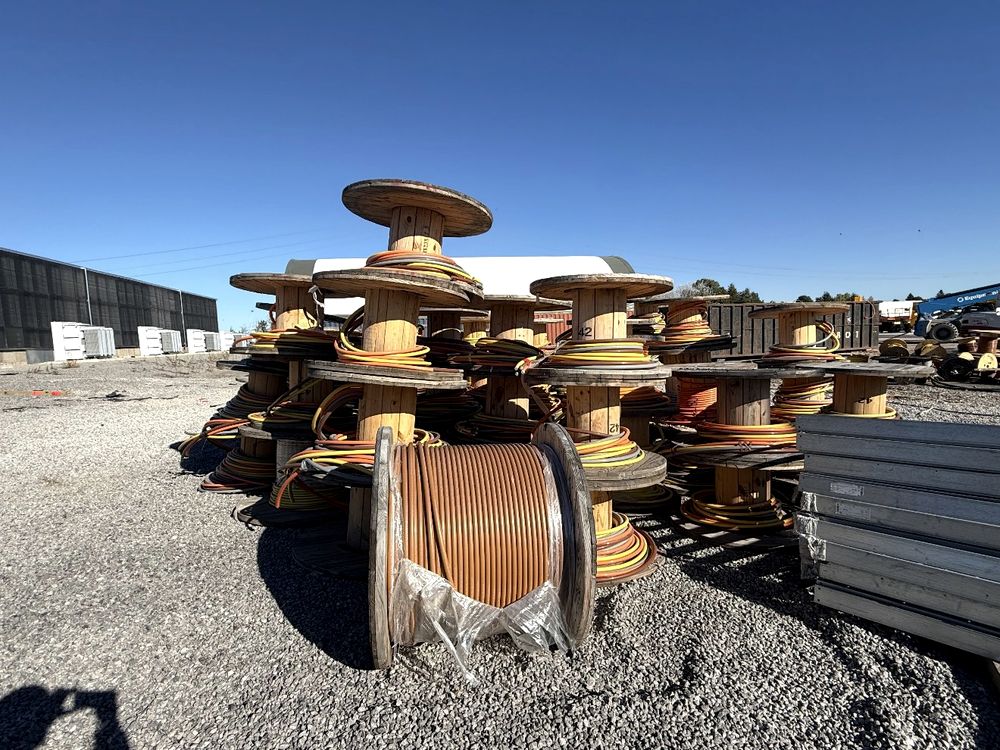
THHN / THWN Building Wire · North Dakota
Surplus wire, reviewed from photosMost building wire sold today is dual marked THHN/THWN-2, which means one jacket covers dry and wet locations. It runs from #14 through 1000 kcmil, solid in the small sizes and stranded above #10, in black, red, blue, white, green, brown, orange, yellow and gray. Full reels, partial reels, coils and cartons of cut lengths all get quoted.
What we buy in this category
- THHN and THWN-2 in #14 through 1000 kcmil
- Single color building wire in black, red, blue and white
- Green grounding THHN on reels and in coils
- Solid #14, #12 and #10 in cartons or partial coils
- Stranded #8 and larger, Class B concentric
- Compact and compressed stranded #2 through 750 kcmil
- THWN single rated wire from older stock
- MTW and machine tool wire marked for panel work
- Reel ends and shop leftovers under 100 feet
- Reels with faded, painted over or missing tags
What the print on the jacket tells you
The legend is the first thing we look at in a photo. A typical line reads THHN OR THWN-2, 600V, then the size, the stranding, a gasoline and oil resistance designation such as GRII, and often a sunlight resistant marking. Footage is printed in feet along one side, which lets you confirm what the tag claims. If the print is legible, the rest of the description gets easier.
The temperature story matters more than most sellers expect. THHN alone is a 90°C dry location conductor. THWN is rated 75°C in wet locations, and THWN-2 carries 90°C wet and dry. The insulation is PVC with a nylon jacket over it, which is why the surface feels slick and why the wire pulls through conduit with less friction than older rubber types. Both are copper conductors; the difference is the listing, not the metal.
Solid, stranded, compact and compressed
#14, #12 and #10 are normally solid, and that is what most receptacle and lighting circuits use. From #8 up the conductor is stranded, usually Class B concentric. Above #2 you will also see compact stranded, where the outer strands are shaped to fill the circle, and compressed stranded, where the whole bundle is rolled down to a smaller diameter. Both put more copper in the same conduit.
That difference shows up in the legend and on the reel tag, and it changes how the reel handles. Compact and compressed reels are stiffer and heavier for the same footage, and a 500 kcmil reel is not something two people walk up a ramp. Say the stranding if you know it. If you do not, the size and the reel weight usually tell us enough. Reel capacity is another clue: 1000 kcmil does not arrive on a small wooden drum.
Tags, footage and what a partial reel is worth
A partial reel is still worth quoting. The tag may say 500 feet when it left the factory, and the counter print at the cut end will show what actually came back. If the wire is still banded to the reel and the tag is intact, say so. If the reel is broken, the flange is split, or the wire has been dragged over gravel, describe that too, because it changes how we look at the load.
Loading is usually simple. A forklift with forks long enough for the reel, a dock height trailer, or a flatbed with a winch handles most building wire. Small coils and cartons can go LTL on a pallet. In North Dakota, service yards west of the Missouri often hold reels left from oilfield electrical work, and grain and processing plants in the east tend to keep leftover feeder from expansion projects. If you have a dock, say the height and whether a trailer can turn around, because that one detail saves a rescheduled pickup.
- Reels with the factory tag still wired on
- Partial reels with readable footage
- Loose coils and cut lengths
- Cartons of #14 and #12 in original packaging
- Reels that sat outdoors and have a chalky jacket
What to send with your request
- A close, in focus photo of the jacket print
- The reel tag, even if it is faded
- Conductor size and color from the print or tag
- Footage on the tag and the counter print at the cut end
- How many reels, and whether each is full or partial
- Solid or stranded, and compact if the tag says so
- Whether the reels are banded and the flanges intact
- Loading access: dock, forklift, flatbed or none
Not sure it fits? Send it anyway. If the construction is something else entirely, we will say so and point you at the right category. Condition and partial footage do not disqualify a submission — they just become part of the conversation.
Request a purchase quote
Send the wire details. Get a real conversation.
Photos and a few specs are enough to start. We will come back with questions or pricing, then agree on pickup or shipping.
Common questions
THHN / THWN Building Wire questions
Does the wire have to be on the original reel?
No. Coils, cut lengths and wire wound onto a different reel all get reviewed. What helps is the size, the color, the jacket print and an honest footage estimate. Loose wire with no tag is harder to price but still worth a photo.
Is THHN the same as THWN?
They are different ratings on the same conductor family. THHN is a dry location conductor at 90°C. THWN adds a wet location rating at 75°C, and THWN-2 carries 90°C wet and dry. Most current stock is dual or triple marked, which the jacket print will show.
Can you quote wire that sat outside for a year?
Yes, with photos. Sun and weather chalk the jacket and fade the print, and water can wick into an open reel end. Send a photo of the outer wrap and the cut end so the condition is visible before we discuss pricing.
Reels sitting in the yard?
Send the tag and a photo of the jacket legend. We will tell you what we need to make an offer.