Industry
SURPLUS WIRE FROM GRAIN, AG AND FOOD PLANT WORK
Farming and food processing run on schedules that do not move for procurement. When a leg or a line goes down in October, the wire gets replaced that day and the leftover reel goes on a shelf. Grain elevators, dryer controls, aeration fans, washdown rooms and packing lines all collect partial reels the same way, usually still banded and usually still tagged. Most of it is identified, dry and still on a reel. If your facility is holding wire from that work, we will review what you have and discuss pricing.
Agriculture and Food Processing
North DakotaThe harvest window and the elevator leg
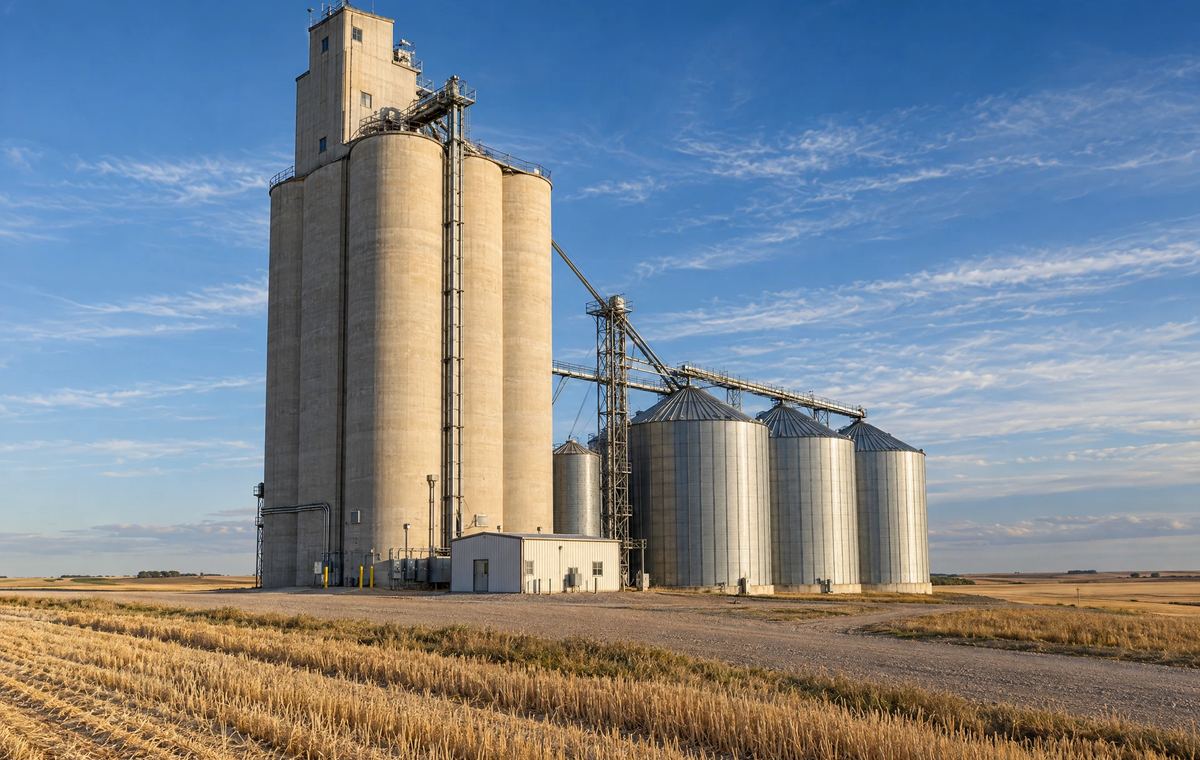
A grain elevator's electrical work clusters into a few weeks. Legs, drags, aeration fans, dryer burners and the loadout spout all draw motor feeders, and the usual stock is THHN and THWN-2 in conduit, tray cable for control runs, and SOOW cord on portable augers and service drops. One elevator can hold eight sizes of feeder and a shelf of control cable and never issue half of it.
Repairs in the middle of harvest do not wait for a purchase order. A contractor pulls a new feeder, leaves the old one coiled by the manhole, and orders more than the job needed because the truck was already coming. The extra reel sits in the shop until somebody decides what to do with it, which is often the following spring. Nothing about that pile is unusual, which is why it goes unnoticed for a season at a time.
Washdown rooms, process control and food plants
Inside a food plant the wire spec is driven by moisture and cleaning chemicals. THWN-2 in wet locations, tray cable on stainless tray, sealed fittings, and instrumentation cable for temperature and level loops. Cable in those areas is often replaced on a maintenance calendar rather than on failure, so removed lengths may be perfectly serviceable and still carry a readable legend.
The tell is in the jacket. A washdown area leaves cable chalky and stiff, and the print fades before the copper does. Photograph the legend close up and the whole length if you can. A reel with 400 feet left on a 1,000 foot drum is still a quotable reel; it just prices differently from a full one, and the footage on the tag settles the question. If the print is gone, the stiffness of the jacket is the next clue.
Ag shops, yards and seasonal power
Dealership shops and equipment facilities carry welding cable, portable cord and heavy conductor for yard service. Welding cable gets replaced when the jacket cracks at the connector, and the old length often stays in the shop because nobody wants to throw copper away. Yard and irrigation runs are usually URD or USE-2, direct burial, two or three conductor with a neutral.
Freight out of a rural facility is the practical question. Many sites have a gravel lot, a loader and no dock, which is workable if we know it in advance. Small lots of coils and cartons can go on a pallet with an LTL carrier. Full reels want a flatbed and a machine that can lift them. Tell us what the site can do and the pickup gets planned around it.
Which wire and cable shows up
- THWN-2 for washdown and wet locations
- Tray cable for plant control runs
- Motor feeder copper from #8 to 4/0
- Instrumentation and shielded pair cable
- SOOW cord on augers and service drops
- Welding cable from shop work
- URD and USE-2 yard and irrigation runs
- Bare copper grounding
How surplus accumulates in this sector
- A harvest repair leaves a partial reel of feeder that is too short for the next leg.
- A dryer or aeration fan rebuild closes out with coils of tray cable unused.
- A washdown area is recoated and the cable is replaced on schedule, not on failure.
- A plant expansion is descoped and sealed cartons stay in the parts room.
- An equipment dealer changes a service configuration and old welding cable stays on the shelf.
- A grain site switches to a different direct burial spec and the old URD reel is left over.
This is not a customer list. These are potential seller audiences in North Dakota. No facility, contractor or company is described as having surplus inventory, and no relationship or endorsement is implied.
Request a purchase quote
Send the wire details. Get a real conversation.
Photos and a few specs are enough to start. We will come back with questions or pricing, then agree on pickup or shipping.
Clearing a storeroom or a laydown yard?
Send one wide photo of the pile and whatever tags you can read. We will work from there.