Industry
SURPLUS WIRE FROM DATA CENTER AND TELECOM BUILDS
Commercial construction buys cable ahead of the schedule, and data center work buys it further ahead than most. Designs change, tenants change, a hall gets rearranged, and the cable ordered for the first plan is still on the floor in cartons. Telecom work leaves spools and partial reels the same way. Most of it is new, boxed and stored indoors, which is exactly the material worth a second look. If your project or facility is holding that stock, we will review the description and the photographs and discuss pricing.
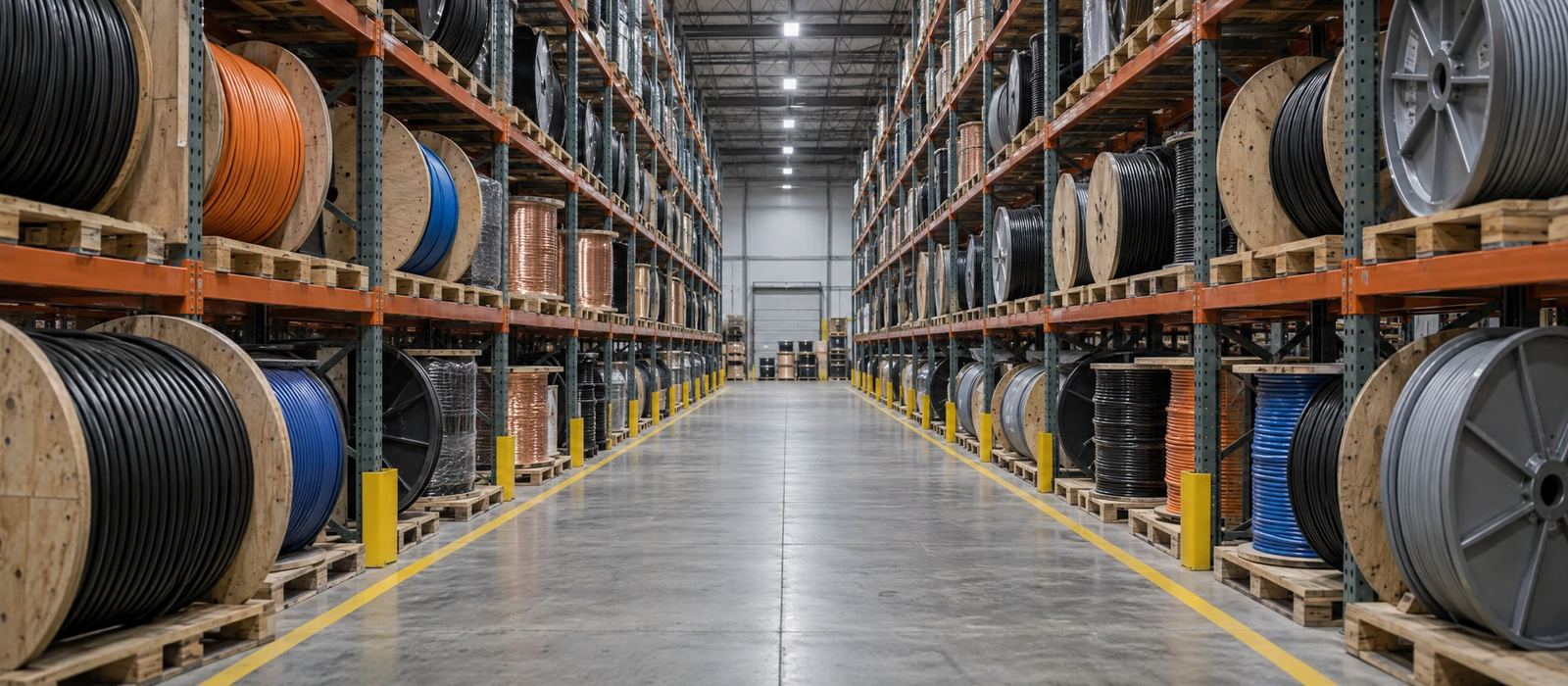
Data Centers, Telecom and Commercial Construction
North DakotaShort build cycles and moving specifications
A large commercial build orders by the pallet: MC and AC cable for branch circuits, XHHW and THHN feeders in 250 through 500 MCM, SER for service runs, and tray cable for controls. When a design revision lands mid-build, the material already delivered does not always match the new drawing, and the pallets get pushed into a corner and counted as lost. Pallets like that get inventoried once and then ignored for the rest of the job.
Data halls add low-voltage and communication cable in volume: plenum rated runs, coax, and shielded cable for controls. A change in connector type or cable category can strand hundreds of boxes that are still sealed. Sealed cartons with legible labels are the easiest thing to quote, so photograph the end label and give the box count with the category. Name the rating, because plenum and riser cable do not trade the same.
Feeders and grounding inside a large facility
The power side of a data center is mostly feeder work. Parallel runs of 4/0 and 500 MCM, XHHW-2 in conduit, and a grounding system that consumes a lot of bare copper in a lot of short pieces. Electrical rooms and mechanical yards generate cutoffs that never get reused because the next run is calculated fresh from the panel schedule.
Conductor count and stranding decide how those cutoffs get read. A single 500 MCM with a cut end is one thing; a four conductor assembly with a full size ground is another. Give the length, the number of conductors, and whether the wire is stranded or compact, and the review has somewhere to start instead of a description of a pile. A cut end photographed beside a tape measure saves a round of email.
Storage, spools and clearing the floor
Storage conditions matter more than people expect. Cable that sat in a conditioned building for two years is in better shape than cable that sat in a trailer through two summers. Racking keeps reels round; a drum on its side in gravel does not stay round. Cardboard spools crush, and a crushed spool of communication cable is still worth describing honestly. A reel standing upright on racking is easier to measure and easier to load.
Loading from a commercial site usually means a dock and a forklift, which simplifies everything. If the material is on an upper floor or in a tight electrical room, say so, because that changes the labor. LTL for pallets and cartons, flatbed for reels, and a pickup arranged once we know the address and what the site can load. Photograph the doorway if the turn is tight.
Which wire and cable shows up
- MC and AC armored cable
- XHHW-2 feeders in 250 to 500 MCM
- SER service cable
- Tray cable and TC-ER for controls
- Plenum rated cable
- Cat 6 and communication cable in cartons
- Coax and low-voltage cable on spools
- Bare copper grounding conductor
How surplus accumulates in this sector
- A design revision lands after the pallets are delivered.
- A tenant fit-out changes category or connector and the sealed boxes stay.
- A parallel feeder run is recalculated and the cutoffs are set aside.
- A telecom upgrade leaves partial spools of communication cable in the cage.
- A building phase is delayed and the cartons sit in conditioned storage for a year.
- A contractor closes out a job with reels that are too short for another floor.
This is not a customer list. These are potential seller audiences in North Dakota. No facility, contractor or company is described as having surplus inventory, and no relationship or endorsement is implied.
Request a purchase quote
Send the wire details. Get a real conversation.
Photos and a few specs are enough to start. We will come back with questions or pricing, then agree on pickup or shipping.
Clearing a storeroom or a laydown yard?
Send one wide photo of the pile and whatever tags you can read. We will work from there.